

I have skied on every kind of slope, from green, blue, red, and black all the way to double black diamond runs — stretching from Canada and the Colorado Rockies in the USA, across Scotland, Spain, the French and German Alps, and Norway, all the way to China, as well as back home in Pakistan — and in all those years I never had an injury like this one. Then, in February 2020 at Malam Jabba, I broke my wrist while I was barely moving. This is the honest story, and the practical safety lessons I want every skier to take from it.
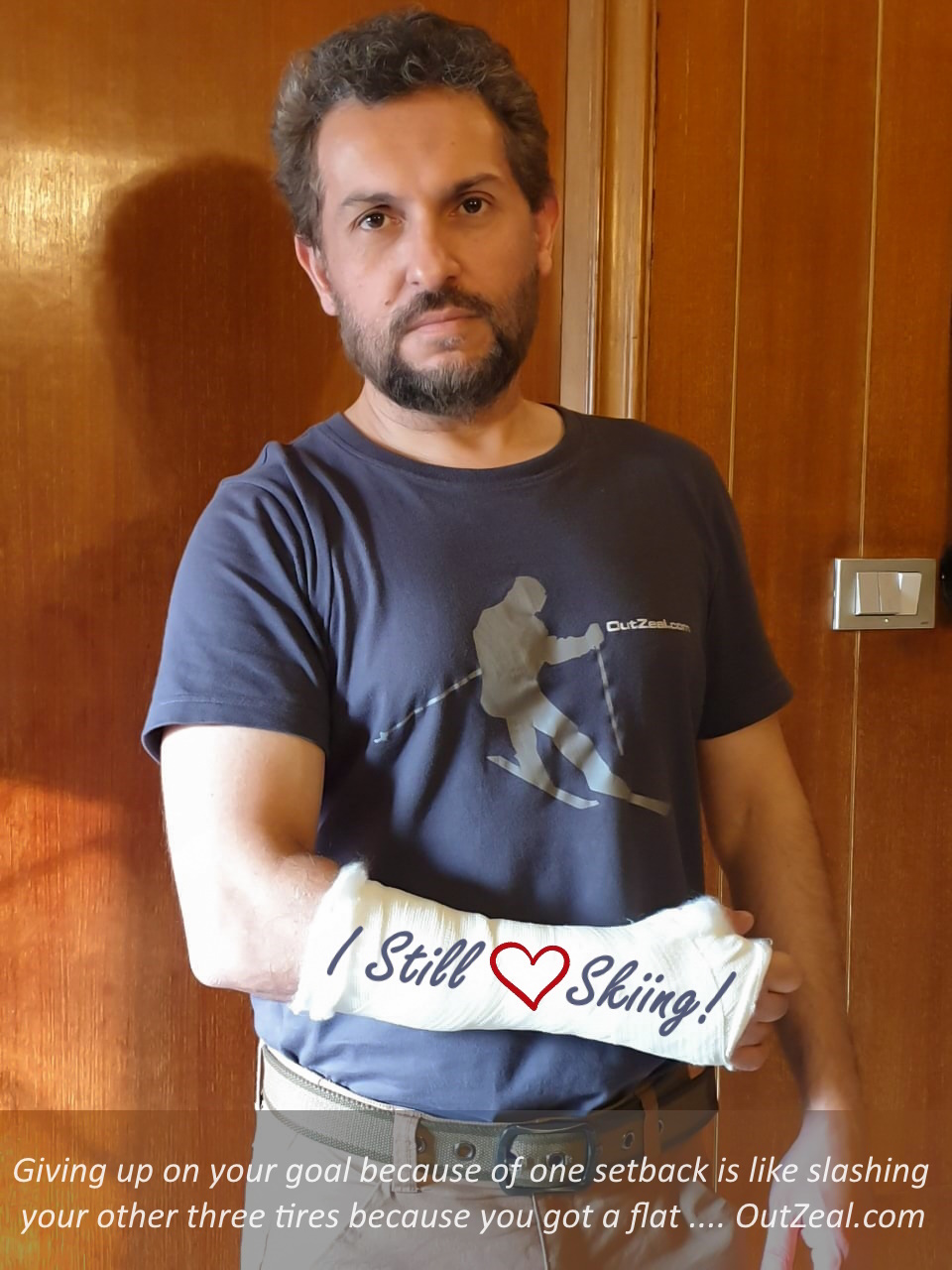
A shot from my February 2020 trip: "One fall at Malam Jabba put my right arm in a cast, but my love for the mountains came out of it without a scratch."
What Happened at Malam Jabba
Up where the slope begins, a thin, less dense layer of snow was covering big rocks. There were no markers, poles or signs to warn anyone. A local might have known they were there; as a visitor, I had no way of seeing them.
I was not skiing fast. I was simply moving slowly toward the spot where I planned to start my run when I fell, and my right forearm was crushed between my own body weight and the hidden rocks. The result was a fracture near the radial styloid, the bony point on the thumb side of the wrist at the end of the radius bone.
The Race I Won With a Broken Arm
At the time, it just felt painful. I had no idea it was broken, so I got back up and started skiing down. Then a snowboarder I had never met came alongside me, and without a single word the body language said it all: we were racing. I raced him, and I won, with a fractured arm I did not even know about yet. Because he lost, he could not digest it and immediately asked for a rematch. I told him my wrist was hurting from a fall and I needed to get it checked, and he brushed it off saying it would be fine. At first I agreed because I did not want him thinking I was scared — then common sense kicked in over adrenaline, and I told him no, I had to call it a day. It makes a good story now, and a reminder to listen to your head when your body is telling you to stop.
Why Hidden Hazards Catch Skiers Out
At well-run resorts in Europe, North America and elsewhere, ski patrol marks dangers such as rocks, stumps and drops with poles, ropes, signs or fencing. In Pakistan, safety and proper hazard marking still do not get the importance they deserve, and too often people assume it will be fine. Thin snow is the classic trap, because it looks like a normal surface while hiding very little depth. Watch for it in these places:
- The tops of slopes, ridges and wind-blown areas, where snow gets scoured thin.
- Early and late in the season, or after a long dry spell.
- Edges of runs and busy spots around lifts and run starts, where traffic scrapes snow away.
- Flat light and overcast days, when the surface texture disappears.
- Darker or greyish patches, small unexplained humps, or the tip of a rock poking through.
How to Stay Safe on Unmarked Slopes
- Ask first: check with instructors, lift staff or local skiers about known rocks and thin spots before your first run.
- Scout slowly: take your first run gently and read the surface, especially at the top and along the edges.
- Stay on the skied line: well-used tracks usually have deeper, packed snow; avoid shortcuts over thin, untracked cover.
- Do not trust low speed: as my fall shows, you do not need to be going fast to get hurt.
- Fall smart: try not to catch yourself on a straight, outstretched arm; keep your hands forward and let your side and hip take the fall.
- Gear and backup: wear a helmet, ski with a friend, and carry a charged phone with the local rescue number saved.
What to Do After a Fall
- If your wrist or arm keeps hurting, swells, or you cannot grip a pole normally, stop skiing. Being able to move it does not mean it is not broken.
- Do not ski down on adrenaline the way I did. Ask ski patrol or staff to help you get down safely.
- Keep the arm still, cool it with ice wrapped in cloth, and get an X-ray. Wrist fractures heal best when they are diagnosed and treated early.
If you are planning a trip to Swat, my guide to skiing in Malam Jabba covers the resort itself, from rentals and lessons to getting there.
Why I Still Love Skiing
The cast in this photo says it best: I still love skiing. People often ask whether a broken bone puts you off the sport, and for me the answer was easy — it was not the mountain's fault, and it was not the sport's fault. The fall came down to a mix of not knowing that slope like a local and the resort's complacency with marking hazards. That is why I put the quote at the bottom of the photo: giving up on something you love because of one setback is like slashing your other three tires because you got a flat. The injury did not change how I feel about skiing; it just left me with a lesson worth sharing, so resorts take safety seriously and skiers know to look, ask, and slow down before they drop in.

💬 Comments
Please Login to Comment!