

The Pyrenees run for around 430 kilometres between Spain and France, from the Bay of Biscay to the Mediterranean, and the Spanish side is one of Europe's most underrated places to ski. The resorts are spread across Catalonia, Aragón and Navarra, with lots of sunshine, lively Spanish après-ski, late lunches and late dinners, and generally smaller crowds and lower costs than the big Alpine names.
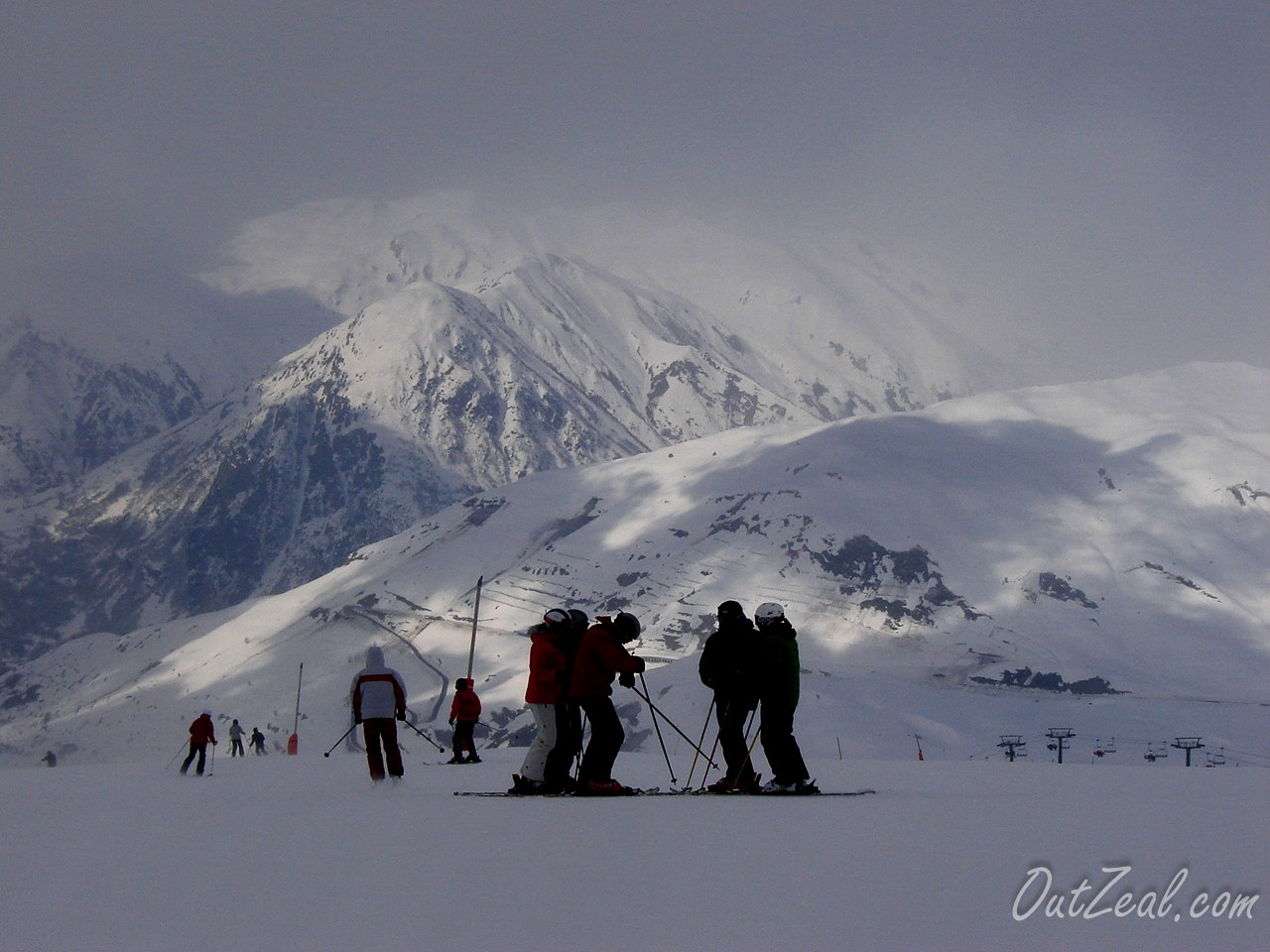
A shot from my February 2013 trip: "Fresh powder underfoot and low cloud wrapped around the summits of the Spanish Pyrenees."
What to Expect
Spanish Pyrenean resorts range from big, modern ski areas to small, old-school hills. Top lift heights are mostly around 2,200 to 2,600 metres, a little lower than the high Alps, so snow can vary from year to year. When a storm comes in from the Atlantic, though, the western and central resorts can get deep, fresh snow, and most areas back it up with plenty of snowmaking. The season usually runs roughly from early December to around Easter, depending on conditions, so check the official resort site before you travel.
Expect a relaxed rhythm. Spanish skiers often start late and take a long lunch, so the slopes can be quiet first thing in the morning. Weekends and Spanish school holidays are much busier than weekdays, especially at resorts close to Barcelona, Zaragoza and Bilbao.
The Main Resorts
- Baqueira Beret: Spain's largest ski area, in the Val d'Aran in Catalonia, with around 170 kilometres of runs. Its north-facing slopes hold snow well, and it is known for good grooming, freeride and a smart, lively village.
- Formigal-Panticosa: In the Tena Valley in Aragón, with around 180 kilometres of skiable terrain across two linked areas. It suits intermediates and families and has a famous après-ski scene.
- Cerler: Above the Benasque Valley, among some of the highest peaks in the range, with long runs and steeper terrain up top.
- Astún and Candanchú: Neighbouring Aragonese resorts close to the French border. Astún is more family-friendly, while Candanchú is older, with more technical runs.
- La Molina and Masella: Linked as one area in the eastern Pyrenees, and the easiest big resort to reach from Barcelona.
What's Available
- Ski and snowboard rental at the base areas and in nearby villages, including helmets
- Group and private lessons through resort ski schools, with English-speaking instructors at the larger resorts
- Nursery areas with magic carpets for children and first-timers
- Snow parks at most of the bigger resorts
- Mountain restaurants and sunny terraces, plus après-ski bars in the main villages
Lift passes are usually cheaper than in the big Alpine resorts, but they still add up by Pakistani standards. Check each resort's official site for current rates and look for multi-day or online deals.
Who It Suits
- Beginners: Most resorts have gentle nursery slopes, good ski schools and easy green and blue runs. La Molina, Astún and the lower parts of Formigal are friendly places to start.
- Intermediates: This is the sweet spot. Baqueira Beret and Formigal-Panticosa have huge amounts of wide, groomed blue and red runs to explore over several days.
- Advanced Skiers and Riders: Look at Baqueira Beret, Cerler and Candanchú for steeper blacks and off-piste. After fresh snow, hire a qualified local guide before leaving the marked runs.
How to Get There
Barcelona is the usual gateway for the Catalan resorts and has the most international flights. Zaragoza is the nearest city for the Aragonese resorts, and Toulouse in France works well for the Val d'Aran and the central Pyrenees. From any of them, you can expect a few hours by road into the mountains. Hiring a car gives you the most freedom, especially if you want to try more than one resort. La Molina can also be reached by train from Barcelona. Carry snow chains or make sure your hire car has winter tyres, because mountain roads can be snowy.
Practical Tips
- Ski on weekdays if you can. Weekends and Spanish holidays bring big crowds and fill up hotels.
- Check the snow report and webcams before you go, especially on lower slopes and in spring.
- Book a valley base like Vielha, Benasque or Jaca if you want more choice of hotels and restaurants.
- The sun is strong at altitude. Wear sunscreen and good goggles or sunglasses, even on cold days.
- Check the avalanche bulletin and go with a guide if you plan to ski off-piste.
The Spanish Pyrenees give you real mountains, sunny slopes and a warm, sociable ski culture, which makes them a great alternative to the Alps.

💬 Comments
Please Login to Comment!